
How to Price Your Trailer Rental (Owner's Guide)
If you own a trailer sitting in your driveway more days than it's hitched up, you could be pulling in real money from it. Peer-to-peer trailer rental has taken off, and the biggest question new owners wrestle with is...
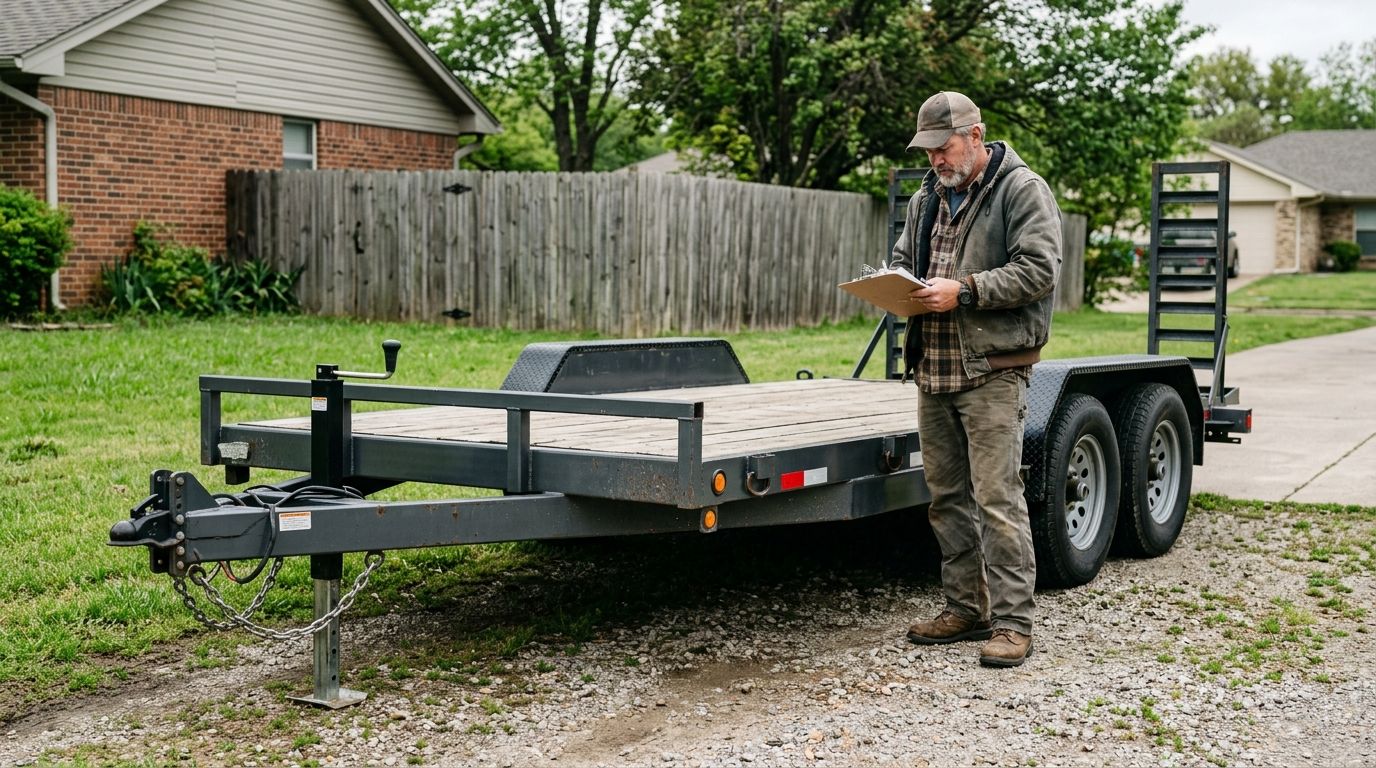
To price your trailer rental, research comparable listings in your area and anchor to market medians: utility trailers typically rent for $50–$100/day, car haulers $100–$140/day, dump trailers $125–$195/day, and goosenecks $150–$230/day. Factor in your trailer's size, age, and features, then set a daily rate, a modest weekend discount (10–15%), and a weekly rate. On BigLoads, you keep 100% of your rental fee with zero commission.
If you own a trailer sitting in your driveway more days than it's hitched up, you could be pulling in real money from it. Peer-to-peer trailer rental has taken off, and the biggest question new owners wrestle with is simple: what should I charge? Price too high and it sits. Price too low and you leave money on the table, attract hagglers, and end up resenting the whole thing. This guide gives you a practical framework to land on a daily rate that rents regularly and pays you fairly.
Start With What the Market Is Actually Paying
Before you pick a number out of thin air, look at what similar trailers in your area are renting for. On BigLoads, you can search your ZIP code or metro and filter by trailer type. Scroll through comparable listings — same type, similar size and year — and note the daily rates. You're looking for the middle of the pack, not the outliers.
To give you a starting point, here are real market medians from BigLoads peer-to-peer listings (based on live priced listings across the platform):
- Car hauler: typically $100–$140/day (median $120)
- Dump trailer: typically $125–$195/day (median $150)
- Utility trailer: typically $50–$100/day (median $75)
- Enclosed cargo trailer: typically $90–$175/day (median $125)
- Flatbed trailer: typically $120–$200/day (median $138)
- Equipment trailer: typically $80–$150/day (median $120)
- Gooseneck trailer: typically $150–$230/day (median $165)
- ATV / snowmobile trailer: typically $75–$120/day (median $97)
These numbers represent what actual renters are paying owner-to-owner right now. Use them as your anchor, not your ceiling.
Price by Trailer Type, Size, and Condition
Within each trailer type, size and condition move the needle. A clean, well-maintained 20-ft tandem-axle car hauler with LED lights and ratchet straps commands more than a rough 16-ft single-axle with rust on the rails. Think through these factors:
- Size and capacity: Bigger trailers with higher GVWRs rent for more. A 7x14 dump at 14,000 lb commands a premium over a 6x10 at 7,000 lb.
- Age and condition: New or near-new trailers justify top-of-range pricing. If your trailer has cosmetic wear but solid mechanicals, stay mid-range and say so honestly in your listing.
- Features and extras: Ramps, spare tires, load binders, tarp kits, and side boards all add value. List them explicitly and price accordingly.
- Tongue type: Bumper-pull trailers fit the widest range of tow vehicles. Gooseneck or fifth-wheel units serve a narrower market but command 30–50% higher day rates.
A good rule of thumb: for most trailer types, the spread from the bottom to the top of the market is roughly 2x. If the floor is $75/day and the ceiling is $150/day, figure out honestly where your trailer sits in that range and price accordingly.
Set Your Daily Rate, Weekend Rate, and Multi-Day Discounts
Most renters want to know three numbers: the daily rate, the weekend rate, and what happens if they need it a week. Here's a simple structure that works:
- Daily rate: Your anchor. Price this at market for your type and size.
- Weekend rate (Fri–Sun, 3 days): Offer a modest 10–15% discount. Renters love a deal; you still earn more than a single day.
- Weekly rate (7 days): A 20–25% discount off daily x 7 is standard. It locks in your trailer and eliminates the back-and-forth of single-day bookings.
- Multi-day (2–4 days): Some owners just charge a flat daily rate for multi-day without a discount. That's fine too, especially if your trailer rents a lot.
Do not go so aggressive on discounts that your weekly rate becomes a loss. A $120/day car hauler at 25% off is $630/week — that's still solid income for a trailer you'd otherwise be staring at.
Deposits, Damage Protection, and What to Put in Your Listing
A daily rate is only part of the picture. Smart owners also think through:
- Security deposit: Most owners hold $100–$300, depending on trailer value. It filters out low-commitment renters and covers minor dings. State it clearly upfront.
- Mileage or delivery limits: If you're delivering the trailer, decide how far you'll go and what extra delivery fee applies. If it's a local-pickup-only trailer, say so.
- Prohibited loads: Wet concrete, hazardous materials, overweight loads. Spell it out. Renters who push back on reasonable rules are renters you don't want.
- Insurance: Most renters' auto policies extend towing coverage. Knowing that ahead of time will save you awkward conversations.
A listing that clearly answers these questions before the renter has to ask builds trust fast — and trust converts browsers into bookings.
Seasonality: When to Push Rates Up (and When to Drop Them)
Trailer demand is seasonal and local. Knowing when your market peaks lets you price into demand instead of guessing:
- Spring through early summer: peak demand for utility, dump, and car hauler trailers as people tackle landscaping, moves, and home projects.
- Summer weekends: ATV, toy hauler, and enclosed trailer demand spikes with recreational use.
- Fall: another solid wave for dump and utility trailers (yard cleanup, firewood, demo projects).
- Winter: slower in cold climates. Consider dropping 10–15% to keep the trailer active, or raise rates if you have a snowmobile trailer where local demand is strong.
You don't need to run a complex algorithm. Just check your local area listings in early spring and late fall, compare to your normal rate, and adjust if the market has shifted.
The P2P Advantage: Why BigLoads Owners Net More
Here's the number that matters most for your bottom line: on BigLoads, you keep 100% of your rental fee. BigLoads takes no commission. Compare that to other platforms that take 15–30% off the top of every transaction.
What that means in real terms: if a renter pays $120/day for your car hauler through a commission-heavy platform, you might pocket $85–$102. On BigLoads at the same rate, you keep the full $120. Across a month of weekend rentals, that gap is hundreds of dollars — real money.
That also means you can price competitively — right at or just below the market median — and still net more than an owner on another platform pricing higher to absorb the commission cut. It's a structural advantage, not just a talking point.
Ready to get your trailer earning? List your trailer on BigLoads and set your rate in minutes. No commission, no gatekeeping, direct contact with renters.
Haul Star: For Owners Who Want More Visibility and Direct Contact
If you want to level up your listing — direct messages from renters, a branded profile, and priority placement — Haul Star ($30/month) is the upgrade. It's built for owners who are serious about generating consistent rental income, not just occasional bookings. One extra rental per month covers the cost. For a high-demand trailer in a busy market, the math is easy.
Pricing Checklist Before You Go Live
Before you publish your listing, run through this quick check:
- Look up 3–5 comparable trailers in your area and note their daily rates.
- Land on your daily rate based on type, size, age, and local market.
- Set a weekend rate (10–15% off) and a weekly rate (20–25% off) if you want multi-day bookings.
- Decide on your security deposit and state it in your listing.
- List every feature honestly: tire size, GVWR, ramp type, spare, extras.
- Spell out prohibited loads and any delivery limits.
- Publish, then revisit your rate in 30 days. If you're not getting bites, trim 10%. If it's booking every weekend, bump up.
For more on what renters are willing to pay, check our trailer rental cost guide — it covers the renter's perspective and can help you see your trailer through their eyes.
Frequently Asked Questions
How much should I charge per day to rent my trailer?
Should I offer a discount for multi-day or weekly rentals?
How does BigLoads compare to other rental platforms on fees?
Do I need a security deposit when renting my trailer?
What is Haul Star and is it worth it for trailer owners?
Ready to haul?
Find the right trailer near you — or list yours and start earning.